Thursday, 25 July 2024

Thirty years and counting: The downs and ups of IPECP

I am Dr. Jill Thistlethwaite, an interprofessional champion and academic, retired from being a family physician but still involved in health professional education through mentoring, writing and presenting, working in Australia but born in the UK.

I became involved with IPE while a general practice educator as we introduced joint education sessions for GP trainees and practice nurses in the 1990s in the north of England, though we did not call this IPE then! In 1996 I moved into academia and met Hugh Barr, one of the principal proponents of IPECP globally - he invited me to be an associate editor for the Journal of Interprofessional Care.  I was also involved in setting up IPE activities for a mix of HP students and recently graduated HPs. 

Over the years I have seen IPECP promoted, forgotten, sidelined and embedded in various places but with an ongoing commitment of the IPECP community to collaboration and improving healthcare delivery, social justice and inclusion.  There is much work to be done as healthcare is subject to political forces and, unfortunately, tribalism still exists amongst HPs in some jurisdictions.  

My achievements in IPECP have been realised through collaborating with a network of colleagues - nothing can be accomplished alone.  I am proud of my publishing record, the nurturing of younger colleagues to write and publish, global presentations to help others develop IPE and my senior Fulbright time at the National Centre for Interprofessional Practice and Education in Minnesota. 

IPR.Global is a global community of practice, that supports and motivates the development and dissemination of IPECP initiatives and research/evaluation concepts and projects.  It is a network of friend and colleagues with similar perspectives and ambitions from diverse backgrounds and cultures. 

@Jill Thistlethwaite

IPR.Global Scholar Spotlight - Dr. Kelly Karpa, East Tennessee State University (Johnson City, Tennessee, USA)

Intersecting education and patient care to improve teamwork, communication, and health outcomes.

Hello, I'm Dr. Kelly Karpa, my undergraduate degree is in pharmacy. I also have a PhD in Pharmacology.  I served as an Interprofessional Education Dean at a R1 institution for many years, before accepting my current role as Associate Dean of Institutional Effectiveness and Innovation at East Tennessee State University Quillen College of Medicine. 

How did you first get involved in interprofessional education and research?  

My first foray into IPE education and research was in 2013, and resulted from being awarded with the Josiah Macy Faculty Scholars 2 year fellowship. 

What achievement are you most proud of in the area of interprofessional education and research?  

At my former institution, we launched an IPE student-led telehealth consult service in which students from PA, MD, PT, OT, Pharm, and RD programs provided profession-specific assessment and recommendations back to the primary care providers who had referred patients to the student team.  Students loved the experience and learned much from their IP colleagues, physicians loved the model, and some patient lives were changed for the better as a result of the encounter with the student teams.  We published a bit about our pilot project. 

Wednesday, 24 July 2024

IPR.Global Scholar Spotlight - Dr. Sarah Meiklejohn, Monash University (Melbourne, Australia)


Open communication between IPE educators, accreditation authorities and health services is essential

Dr Sarah Meiklejohn is a dietitian, educator and researcher based at Monash University in Melbourne, Australia. She is currently a Lecturer and Education Coordinator at the Monash Centre for Scholarship in Health Education (MCSHE), and a Research Fellow in the School of Nursing and Midwifery, Monash University.  As an emerging methodology in health professions education, Sarah is currently sharing this applied knowledge and expertise of policy analysis across a variety of national projects. She is best known for her research focused on work integrated learning, interprofessional education and collaborative practice, accreditation, certification and regulatory policy in health professions education.

I first became involved in interprofessional education and research through my role as a Lecturer into the Masters of Dietetics at Monash University. Interprofessional practice was such a core part of my practice as a community dietitian and health promotion practitioner that I was drawn to teaching and research opportunities in this area.

Our team at Monash University was recently recognised at the 2023 All Together Better Health Conference in Qatar for our Collaborative Care Curriculum, where we received an Interprofessional.Global Award to celebrate and honour our achievements in global interprofessional collaboration. I am very proud of this achievement as it showcases the value and importance of long-term investments in interprofessional education and commitment to the development of meaningful relationships with shared goals.

As an Early Career Researcher, Interprofessional.Global is a key network for not only developing my capacity as an educator and researcher, but for shared learning and mentoring across global and regional networks to improve collaborative practice and interprofessional learning across all healthcare networks.

Finally, pineapple may only be on pizza when in the form of a Hawaiian or “the LOT” pizza, but under no other circumstances!

Friday, 19 July 2024

IPR.Global Scholar Spotlight - Dr. Aayesha Kholvadia, Nelson Mandela University (South Africa)


Fostering Collaboration and Innovation in Interprofessional Education and Research at Nelson Mandela University.

 Who Are You? Where Are You From? And What Is Your Role

I am Dr. Aayesha Kholvadia, a dedicated senior lecturer, HOD, and researcher and the IPE chairperson at Nelson Mandela University, within the Faculty of Health Sciences. My role involves advancing interprofessional education (IPE) and research, with specific focus areas on fostering collaborative practices among healthcare professionals. This includes bringing education and engagement to the three schools within our faculty: the School of Medicine, Clinical and Medicinal Sciences, and the School of Lifestyle and Behavioural Sciences. Originating from and working in Gqeberha (Port Elizabeth), a city in the Eastern Cape, I am acutely aware of the health inequality challenges in both curative and preventative health in our region. I am committed to promoting innovation and cooperation in health education and practice at NMU.

How Did You First Get Involved in Interprofessional Education and Research?

I am Dr. Aayesha Kholvadia, a dedicated senior lecturer, HOD, and researcher at Nelson Mandela University, within the Faculty of Health Sciences. My role involves advancing interprofessional education (IPE) and research, with specific focus areas on fostering collaborative practices among healthcare professionals. This includes bringing education and engagement to the three schools within our faculty: the School of Medicine, Clinical and Medicinal Sciences, and the School of Lifestyle and Behavioural Sciences. Originating from and working in Gqeberha (Port Elizabeth), a city in the Eastern Cape, I am acutely aware of the health inequality challenges in both curative and preventative health in our region. I am committed to promoting innovation and cooperation in health education and practice at NMU.

My journey into interprofessional education and research began during my early career as a PhD candidate at Wits, where one objective focused on the multidisciplinary management of knee osteoarthritis. Additionally, I was involved in IPE sessions where different departments in the faculty worked together on cases, witnessing the transformative impact of collaborative practice on patient outcomes. This inspired me to pursue further studies and research in IPE, eventually leading to my current role where collaborative practice is a focal point of my research, engagement, and teaching.

I am a member of The Network: Towards Unity for Health (TUFH) and the African Interprofessional Education Network (AfrIPEN), both national and international bodies dedicated to collaborative healthcare.  Further I am supervising PG students in the discipline area (3 PhD and 2 Masters and 2 undergraduate). Research collaboration with Prof W Burdick from the University of Philadelphia 

What Achievement Are You Most Proud of in the Area of Interprofessional Education and Research?

I am most proud of several significant achievements in the field of interprofessional education and research. I was a guest and invited speaker at the TUFH conference in Vancouver, Canada in 2022, which provided a platform to share insights and advancements in IPE on an international stage. Additionally, I serve as the chairperson of our faculty's IPE committee, where I lead efforts to integrate collaborative practices across different departments. I have also contributed to the academic literature, with my most recent publication being a literature review in the Patient Experience Journal titled "Patients’ Perceptions of Interprofessional Collaboration: A Scoping Review." These accomplishments have not only advanced the field but also significantly benefited our community and demonstrated the power of interprofessional collaboration.

What Does IPR.Global Mean to You?

To me, IPR.Global represents a dynamic platform for knowledge exchange, collaboration, and innovation. It is a community that unites scholars and practitioners from around the world, dedicated to enhancing interprofessional education and research, and ultimately improving global health outcomes.

Pineapple on Pizza: Yes or No?

Pineapple definitely belongs on pizza! There’s people who eat pizza without pineapple? Is that even legal? 😊

Wednesday, 24 January 2024

IPR.Global Scholar Spotlight - Dr. Kelli Star Fox, Stony Brook University (New York, USA)

Dr. Kelli Star Fox is the inaugural Director of the Center for Interprofessional Innovation (CIPI) at Stony Brook University (New York, USA) charged with building a centralized IPE presence across health professions programs in areas of interprofessional education, research, and clinical practice. Kelli’s previous position was as associate clinical professor, director of fieldwork, and assistant director of the University of New England’s (UNE) master in social work program. A longtime champion for interprofessional education and practice, Kelli was instrumental in integrating interprofessional education and practice into UNE’s social work curriculum. As an active contributor to UNE’s Center to Advance Interprofessional Education and Practice (CAIEP) she served as a trainer, facilitator, mentor, researcher, and designer of IPCP learning experiences.

In May 2023 Kelli completed her doctoral degree from Millersville University. Her research focused on the importance of supporting the uniprofessional identity of social workers as preparation for interprofessional team learning. Kelli explains her rationale for the study saying: “As an IPE facilitator I observed social work students struggle with finding their place and voice among other health care students. The uniprofessional pre-briefing offers these students an opportunity to anchor the unique skills and perspective the profession brings to interprofessional collaboration and begin to develop interprofessionalism.” Kelli’s work in this arena is novel and she has presented at local, national, and international conferences where her research has been well received.  Kelli is currently a member of an international team looking at positionality and the role of social work and hierarchical implications in interprofessional collaborative learning and practice.

Along with her emerging role as a researcher, Kelli’s passion for global health and wellness brings her annually to Ghana, Africa where she along with local and international practitioners and students offer clinics in multiple rural sites through the Cross-Cultural Immersion to Ghana, a program that integrates western health practices with local practices to provide culturally responsive health care to those they serve. “Working and learning alongside our partners in Ghana as well as observing cultural exchanges and friendships that happen among students, faculty, providers, and community members,” Kelli says, “have been highlights of my experience with the Immersion program.”

You can contact Kelli at: Kelli.Fox@stonybrookmedicine.edu

Thursday, 11 January 2024

IPR Global Pearls: The Transformative Power of Inclusion, Diversity, Equity, Accessibility, and Social Justice in Interprofessional Education and Collaborative Practice - Joint E-Book Discussion Paper​

In the ever-evolving landscape of healthcare and education, the principles of Inclusion, Diversity, Equity, Accessibility, and Social Justice have emerged as guiding beacons for Interprofessional Education and Collaborative Practice (IPECP). We recognize that these foundational elements are not mere buzzwords, they are the pillars upon which our collective impact rests. In this Discussion Paper, we unravel the significance of inclusion, diversity, equity, accessibility, and social justice in shaping a more compassionate, equitable, and effective healthcare ecosystem.

ACCESS THE REPORT: https://interprofessionalresearch.global/wp-content/uploads/2024/01/IPR.Global-EDIA-Discussion-Paper-2024.pdf

CITATION: Lackie, K., Khalili, H., Gilbert, J., Bookey-Bassett, S., Cutler, S., Dixon, K., Fricke, M.,  Greene, C., Harvan, R., Jessen, J., Langlois, S., Macdonald, L., Maxwell, B., McCarten, C., Najjar, G., Park, V., Saad, A., Syvaoja, K., Schneider, C.(2024). The Transformative Power of Inclusion, Diversity, Equity, Accessibility, and Social Justice in Interprofessional Education and Collaborative Practice – Discussion Paper, Joint E-Book Publication by InterprofessionalResearch.Global, Canadian Interprofessional Health Collaborative & American Interprofessional Health Collaborative, ISBN: 978-1-7366963-4-7. Published by: https://interprofessionalresearch.global/ 

Wednesday, 10 January 2024

Interactive "Conversation Corners" available with release of new E-Book Discussion Paper on Inclusion, Diversity, Equity, Accessibility (IDEA) and Social Justice

The Global Network for Interprofessional Education and Collaborative Practice Research (InterprofessionalResearch.Global), the Canadian Interprofessional Health Collaborative (CIHC), and several members of the American Interprofessional Health Collaborative (AIHC) have collaborated to release a thought-provoking discussion paper entitled: The Transformative Power of Inclusion, Diversity, Equity, Accessibility, and Social Justice in Interprofessional Education and Collaborative Practice – Joint E-Book Discussion Paper

The importance of addressing inclusion, diversity, equity, accessibility, and social justice within the context of IPECP is examined and  strategies and novel approaches are offered. With the publication of this Joint Discussion Paper, we embark upon a journey that transcends mere knowledge acquisition as these constructs are the cornerstones that shape not only our professional endeavors but also the very fabric of our interconnected world.

To facilitate a global conversation in building and leading more inclusive, equitable, socially just, and accessible healthcare for all, IPR.Global Knowledge Network is hosting two Conversation Corners on

  • January 24th, 2024, at 9:00-10:30am EST
  • January 30th, 2024, at 4:00-5:30pm EST
To join, please RSVP here (https://forms.gle/aZPwRzy3UGfT6mxP7) by January 22nd, 2024.

Thursday, 21 December 2023

New publication featuring update on 2022 IPR.Global Situational Analysis research

The status of interprofessional education (IPE) at regional and global levels – update from 2022 global IPE situational analysis

Hossein Khalili, Kelly Lackie, Sylvia Langlois, Camila Mendes da Silva Souza & Lisa-Christin Wetzlmair

Journal of Interprofessional Care (2023)

ABSTRACT

This short report is based on the 2022 Global IPE Situational Analysis Results e-Book that is available at https://interprofessionalresearch.global/. As an up-to-date global environmental scan of interprofessional education (IPE), this cross-sectional study investigated institutional, administrative, and system-level processes that support IPE program development and implementation globally. Conducted by InterprofessionalResearch.Global (IPR.Global), the survey included 17 quantitative questions that were analyzed at global and regional levels. Three open-text questions were thematically analyzed. In total, 152 institutions from six regions worldwide contributed to this study. Results revealed that only 51.97% of all responding institutions have an established IPE program, with Canada and the USA having the highest (84%) and Africa (26%) having the lowest numbers. Globally, 37.33% of respondents reported no formal leadership positions and 41.33% reported the absence of a designated IPE Director or Coordinator. In addition, IPE funding varies considerably across the world, with 32.65% of institutions reporting no financial support. Over 48.22% of respondents indicated their institutions are rarely or not involved in IPE-related scholarly work or research. The open-text analysis revealed that supportive senior leadership, a culture of collaboration, and recognition of IPE as a strategic direction and/or priority at the institutional level, could foster the successful implementation of IPE. On the other hand, inadequate administrative support, lack of funding, poor attitudes regarding IPE, and limited dedicated time for research, seemed to impair successful implementation of scholarly activities in the field.

Access the full article here: https://www.tandfonline.com/doi/full/10.1080/13561820.2023.2287023

Access the full IPR.Global Situational Analysis Report here: https://interprofessionalresearch.global/2022-global-ipe-situational-analysis-results/

CITATION

Hossein Khalili, Kelly Lackie, Sylvia Langlois, Camila Mendes da Silva Souza & Lisa-Christin Wetzlmair (2023) The status of interprofessional education (IPE) at regional and global levels – update from 2022 global IPE situational analysis, Journal of Interprofessional Care, DOI: 10.1080/13561820.2023.2287023

Friday, 15 December 2023

New Publication: Forward Thinking and Adaptability to Sustain and Advance IPECP in Healthcare Transformation Following the COVID-19 Pandemic

Forward Thinking and Adaptability to Sustain and Advance IPECP in Healthcare Transformation Following the COVID-19 Pandemic

Hossein Khalili,  Jyotsna Pandey, Sylvia Langlois, Vikki Park, Ryan Brown, Alla El-Awaisi, Kathleen MacMillan, Shelley Cohen Konrad, Brittany Daulton, Christopher Green, Giray Kolcu, Charlotte McCartan, Gina Baugh, Andrea Pfeifle, Lisa Wetzlmair, Inci Kolcu, Anthony P. Breitbach

ABSTRACT

The proliferation of the novel SARS-CoV-2 (COVID-19) virus across the globe in 2020 produced a shared trauma internationally of unprecedented devastation, disruption, and death. At the same time, the pandemic has been a transformation catalyst accelerating the implementation and adoption of long overdue changes in healthcare education and practice, including telehealth and virtual learning. The COVID-19 pandemic has placed healthcare at a crossroads, either viewing it as a temporary situation that requires short-term solutions, or as a major disruption that presents opportunities for innovation for sustainable development and transformation. As COVID-19 transitions from pandemic to endemic, we have a unique opportunity to leverage lessons learned that can foster healthcare transformation through innovation, forward thinking, and interprofessional education and collaborative practice (IPECP). With the changing landscape of higher education and healthcare, IPECP leaders need to reflect on and implement ‘Forward Thinking and Adaptability’ and ‘Sustainability and Growth’ in their IPECP approaches and strategies to achieve the Quintuple Aim. To capitalize on this opportunity and based on a recent publication by InterprofessionalResearch Global, this paper explores and debates (from a global perspective) the impact and application of healthcare education and practice transformation on IPECP with the goal to identify best practices in integrating and sustaining IPECP and building a resilient workforce. 

Access the article here: https://nsuworks.nova.edu/ijahsp/vol22/iss1/18/

CITATION

Khalili H, Pandey J, Langlois S, Park V, Brown R, El-Awaisi A, MacMillan K, Cohen Konrad S, Daulton B, Green C, Kolcu G, McCartan C, Baugh G, Pfeifle A, Wetzlmair L, kolcu I, Breitbach AP. Forward Thinking and Adaptability to Sustain and Advance IPECP in Healthcare Transformation Following the COVID-19 Pandemic. The Internet Journal of Allied Health Sciences and Practice. 2023 Dec 15;22(1), Article 18.

Sunday, 12 November 2023

Dr. Michael Sy receives John H.V. Gilbert IPR.Global Research Award

InterprofessionalResearch.Global (IPR.Global) proudly announces the recipient of the 2022-2023 John H.V. Gilbert IPR.Global Research AwardDr. Michael Palapal Sy, PhD, MHPEd, OTRP. Dr. Sy’s exceptional doctoral dissertation exemplifies the very spirit of interprofessional collaboration, boldly pushing the boundaries of interprofessional knowledge and practice.

John H.V. Gilbert IPR.Global Award recognizes an outstanding interprofessional doctoral dissertation, published in the past three years, that has resulted in a learning paradigm which brings interprofessional education and learning to interprofessional collaborative practice in a practice setting where practitioners, students and patients have been engaged in developing measurable interprofessional high quality care.”

Dr. Sy’s outstanding research has yielded numerous publications and impactful presentations, demonstrating immense potential in bridging the gap between interprofessional education and collaborative practice. His work contributes to measurable, high-quality care—a beacon for the entire healthcare community. 

Please watch Dr. Sy’s Presentation at: https://interprofessionalresearch.global/2022-23-ipr-global-award/.


We celebrated Dr. Sy’s achievements at the 
11th International Conference on Interprofessional Education and Collaborative Practice (ATBH XI) in Doha, Qatar, where he received the prestigious John H.V. Gilbert IPR.Global Research Award. Join us in congratulating Dr. Michael Sy for his remarkable contributions to the field. His dissertation and dedication to IPECP inspire us all to strive for excellence.

The 2024-2025 IPR.Global Best Research & Leadership Award Online Application will open in February 2024!


For more information about InterprofessionalResearch.Global and the IPR.Global Awards, please visit our website at www.interprofessionalresearch.global.

Thank you for your continued dedication to advancing interprofessional collaboration and excellence in research and leadership.

Wednesday, 4 October 2023

Perceptions of Interprofessional Identity Formation in Recent Doctor of Physical Therapy Graduates: A Phenomenological Study

Laura Plummer, PT, DPT, EdD; Keshrie Naidoo, PT, DPT, EdD (MGH Institute of Health Professions, Boston, MA, USA)

This study examined how recent Doctor of Physical Therapy graduates from a health professions graduate school with an interprofessional curriculum conceptualize their professional and interprofessional identity (i.e., dual identity). Theoretical frameworks included social identity theory, intercontact group theory, and the interprofessional socialization framework. Semi-structured interviews were conducted with 12 graduates in their first 1–2 years of practice in inpatient settings. Transcripts were analyzed using iterative and inductive phenomenological analysis to identify themes. Four themes related to professional identity emerged: from patient to physical therapist, profession exceeding expectations, connection with patient, and role affirmation through meaningful work. Six themes related to interprofessional identity emerged: valuing different mindsets, the authenticity of interprofessional education, feeling misunderstood, perceived versus true hierarchy, differing team dynamics, and being on the same page. Approaches to interprofessional education that focus on longitudinal socialization from professional education through clinical practice might best support the development of clinicians who value interprofessional collaborative practice.

CITATION:

Plummer L, Naidoo K. Perceptions of Interprofessional Identity Formation in Recent Doctor of Physical Therapy Graduates: A Phenomenological Study. Education Sciences. 2023;13(7):674.

LINK:  https://www.mdpi.com/2227-7102/13/7/674


Monday, 11 September 2023

IPR Global Scholar Spotlight - Rogério Meireles Pinto PhD, University of Michigan (USA)

I was born in Belo Horizonte, Brazil, and came to the United States after I finished college and received a bachelor’s in biological sciences. I lived in New York City, where I received my masters and PhD in social work. For a decade, I was a professor at Columbia University, and then I moved to Michigan, Ann Arbor. At the University of Michigan, I am the University Diversity Social Transformation Professor, Berit Ingersoll-Dayton Collegiate Professor of Social Work, and Associate Dean for Research and Innovation, Social Work. I also have an appointment at the Theater and Drama, School of Music, Theater & Dance. 

My research focuses on finding academic, sociopolitical, and cultural venues for broadcasting voices of oppressed individuals and groups. Funded by the National Institutes of Health (NIH), my community-engaged research focuses on the impact of interprofessional collaboration on the delivery of evidence-based services (HIV and drug-use prevention and care) to marginalized racial/ethnic and sexual minorities in the United States and Brazil. This research has illuminated specific factors, notably, interprofessional collaboration, that facilitate access to myriad social, medical, and public health services.*  

I have conducted art-based and artistic research. For example, with collaborators funded by National Institute of Health (NIH) (PIs: Windsor, Benoit, Pinto), we have developed and tested interventions that use illustrations to spark critical dialogues among formerly incarcerated men with substance use disorders.**

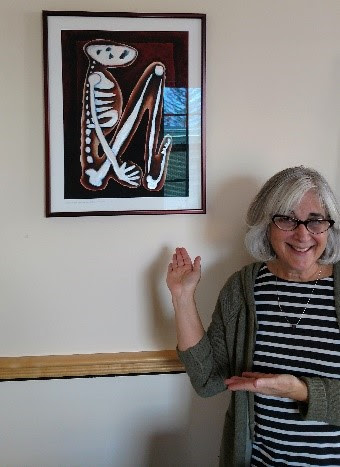
I performed Marília, a one-person play, on New York City's Theatre Row in 2015 and at the University of the Free State in Bloemfontein, Vrystaat, South Africa in 2016. In Marília, I explore the tragic death of his 3-year-old sister and how it haunts and inspires the family she left behind. Marília won the United Solo Festival Best Documentary Script. Funded by the University of Michigan Office of Research and several other sources, I built the Realm of the Dead, an art installation to investigate my own marginalization as a gender non-confirming, mixed-race, and Latinx immigrant.*** I performed the Realm of the Dead in 2021 at the University of Michigan as part of the centennial celebration of the School of Social Work, and in 2022 as the featured artist at a2ru’s national annual conference. 

Dr. Rogério Meireles Pinto bio (including contact information) at the University of Michiganhttps://ssw.umich.edu/faculty/profiles/tenure-track/ropinto

REFERENCES

*Pinto, R. M., Kay, E. S., Choi, C. J., & Wall, M. (2020). Interprofessional Collaboration Improves the Odds of Educating Patients about PrEP Over Time. Journal of General Internal Medicine, 35(5), 1444-1451. doi: 10.1007/s11606-019-05616-0

*Pinto, R. M., Kay, E. S., Choi, C. J., & Wall, M. (2019). Interprofessional Collaboration Improves Linkages to Primary Care: A Longitudinal Analysis. AIDS Care, 32:8, 970-978, DOI: 10.1080/09540121.2019.1668537doi.

*Pinto, R. M., Witte, S., Filippone, P., Choi, J., & Wall, M. (2018). Interprofessional Collaboration and On-the-Job Training Improves Access to HIV Testing, Primary Care and Pre-Exposure Prophylaxis (PrEP). AIDS Education and Prevention, 30, 6.

*Pinto, R. M., Rahman, R., Zanchetta, M. S., & Galhego Garcia, W. (2021). Brazil’s Community Health Workers Practicing Narrative Medicine: A Service Consumer Perspective. Journal of General Internal Medicine. https://doi.org/10.1007/s11606-021-06730-8

** Windsor, L., Benoit, E., Pinto, R. M., Sarol, J. (2022). Optimization of a new adaptive intervention using the SMART Design to increase COVID-19 testing among people at high risk in an urban community. Trials, 14;23(1):310. doi: 10.1186/s13063-022-06216-w. PMID: 35421999; PMCID: PMC9009493.

*** Pinto, R. M. (2022). Realm of the Dead: A Mixed-Media Installation Performance. Ground Works.  https://groundworks.io/journal. © 2022 by Rogério Meireles Pinto is licensed under CC-BY-NC-ND 4.0. Published: September 20, 2022. DOI https://doi.org/10.48807/2022.0.0105


Friday, 8 September 2023

IPR.Global Scholar Spotlight - Tamzin J. Batteson BSc, Rosalind Franklin University of Medicine and Science (USA)

Hello, my name is Tamzin Batteson and I have lived in 6 different countries throughout my life (United Kingdom, New Zealand, Australia, France, Ireland and now the United States). These life experiences have made me the person that I am, which is inquisitive, sometimes bold, and fearless, thoughtful and open minded. I am also a working artist, and I use all of these perspectives in my research. I became interested in the impact that social determinants of health and disparities have on a person’s life and life outcomes as a research assistant at the National Health Service in St. Anne’s Hospital in London. The project assessed the barriers that heavy end dual diagnosis drug users and sex workers experience in trying to get housed. This led to a long term interest in health and social disparities and how to overcome such barriers in vulnerable populations. 

I realized that many barriers existed because of the way the problems were systematically approached by government and societal structures. In order to understand how people approach and solve problems, I became interested in metacognition - how people think

Metacognition is the skill and process to be aware of one’s own thinking and connect the dots to concepts and patterns. This is especially helpful when training students as students learn how to learn effectively and can take their metacognitive skills to a higher level in whatever profession they choose. 

I joined the Department of Education at the University of Limerick (Ireland) as a post-doctoral fellow to assess metacognitive processes, learning styles and the ‘big five’ personality traits of extraversion, agreeableness, openness, conscientiousness, and neuroticism. Specifically, I was interested in learning how to teach teachers how to teach more effectively and developed and taught a course on “How Students Learn” to student teachers. 

Personal circumstances led me to jump over the Big Pond and I joined RFUMS and Baldwin Interprofessional Institute in 2013 as I recognized that IPE is a new, metacognitive, way of thinking about healthcare and social disparities. The study of metacognition is very theory driven. Yet IPE did not yet have a theoretical basis or understanding. It was a big missing piece. By combining IPE and metacognitive theory, I developed a research program to conduct robust and validated research in IPE, with a grounded, testable theory. By framing the problems of patient care and social disparities using metacognitive theory to underpin IPE, I hope to bring information and understanding of new perspectives to the field. 

My current research focuses on implementing metacognitive theory into aspects of interprofessional healthcare education through simulation and diagnostic reasoning and error.  I approach the journey of an individual to being part of a team by using metacognition to assess communication and how communication works within the structure of an IP team.

Learn more about the DeWitt C. Baldwin Institute for Interprofessional Education at Rosalind Franklin University of Medicine and Science: https://www.rosalindfranklin.edu/academics/interprofessional-institute/

Contact information:  tamzin.batteson@rosalindfranklin.edu

References:

  • Krishnan, G., Chu J., Guo, J., Sandu, S., Yohay, S., Zhang, J., Mihajlovic, A., Batteson, T., & Loduca, A. (2023) Beyond Cultural Humility - South Asian Cultural Specificity Training Garners Reform in Medical Curricula: A Workshop for Medical Students of Free Community Clinics. World Social Psychiatry.
  • Collins, K., Garber, S., Batteson, TJ., Salih, R. (2023 Interprofessional Healthcare Themes derived through Critical Discourse Analysis. Journal of Educational Studies and Multidisciplinary Approaches
  • Batteson, T. J., Chirica, M. G., Fox, K. S., Froehlich, J., Garber, S. S.,  … Thuente, L. (2023). Utilizing video simulation in interprofessional education to teach IPEC competencies and social determinants of health: A universal IPE teaching tool, Journal of Interprofessional Education & Practice, Volume 31
  • Bunting, S. R., Calabrese, S. K., Spigner, S. T., Goetz, T. G., Morrison, S. D., Zucker, S. M., ... & Batteson, T. J. (2022). Evaluating Medical Students' Views of the Complexity of Sexual Minority Patients and Implications for Care. LGBT health. 
  • Chirica, M. G., & Batteson, T. J. (2022). Metacognition, Macro cognition and Moral Reasoning in Collaborative Team Decision-Making: Implications for Healthcare Education. Journal of Educational Studies and Multidisciplinary Approaches, 2(1).
  • Bunting, S. R., Chirica, M. G., Ritchie, T. D., Garber, S. S., & Batteson, T. J. (2021). A National Study of Medical Students' Attitudes Toward Sexual and Gender Minority Populations: Evaluating the Effects of Demographics and Training. LGBT health, 8(1), 79-87.
  • Bunting SR, Garber SS, Goldstein RH, et al. (2021). Health Profession Students' Awareness, Knowledge, and Confidence Regarding Preexposure Prophylaxis: Results of a National, Multidisciplinary Survey. Sexually Transmitted Diseases. Jan;48(1):25-31.
  • Bunting, S. R., Calabrese, S. K., Garber, S. S., Ritchie, T. D., & Batteson, T. J. (2021). Where Do Health Professions Students Learn About Pre-exposure Prophylaxis (PrEP) for HIV Prevention?. Medical Science Educator, 1-5.
  • Olivier, M. M., Polachek, C. A., Park, C., Batteson, T., & LoDuca, A. L. (2020). Ocular risk factors for eye disease and associated sociodemographic factors in underserved communities within greater Chicagoland. Investigative Ophthalmology & Visual Science, 61(7), 1579-1579.
  • Bunting, S. R., Garber, S. S., Goldstein, R. H., Ritchie, T. D., Batteson, T. J., & Keyes, T. J. (2020). Student Education About Pre-exposure Prophylaxis (PrEP) Varies Between Regions of the United States. Journal of general internal medicine, 1-9.
  • Bunting, S.R., Saqueton, R. & Batteson, T.J. (2019). A Guide for designing student-led, interprofessional community education initiatives about HIV risk and pre-exposure prophylaxis. MedEdPORTAL
  • Fewster-Thuente L, Batteson T. (2018). Teaching Collaboration Competencies to healthcare provider students through simulation. J of Allied Health. 47(1): 3-8. 
  • Fewster-Thuente L, Batteson T. (2018). Kolb’s Experiential Learning Theory as an underpinning for interprofessional education. J of Allied Health. 47(1): 3-8. 
  • Batteson T, Garber S. (2018). Assessing constructs underlying Interprofessional Competencies through the design of a new measure of Interprofessional Education. J of Interprofessional Education and Practice. 
  • Comerford, J., Batteson, T., & Tormey, R. (2015). Academic buoyancy in second level schools: Insights From Ireland. Procedia-Social and Behavioral Sciences, 197, 98-103.
  • Batteson, T., Tormey, R., Ritchie, T, D. (2013) Strategic approaches to learning, metacognition and personality in higher education learners; an exploratory and confirmatory factor analysis of three instruments. Procedia - Social and Behavioral Sciences, 116, 2561-2567.
  • Rothi, D., Batteson, T. Leavey, G. (2005) Drug user consultation: Assessing housing and social care needs. Report Commissioned by the 'Drug and Alcohol Action Team' Haringey

Saturday, 26 August 2023

IPR Global Pearls: Interprofessional collaboration: A public policy healthcare transformation call for action - National Academies of Practice


Interprofessional collaboration: A public policy healthcare transformation call for action

Irma Ruebling, Terry Eggenberger, Jody Shapiro Frost, Ellayne Ganzfried, Annette Greer, Hossein Khalili, Jessica Ochs, Julie Ronnebaum, Susan M. Stein (National Academies of Practice)

Journal of Interprofessional Education and Practice (2023)

The United States faces a health system crisis from evolving and lingering social, economic, and political issues complicated by a global pandemic. However, it is the same crisis that presents opportunities for transformation as the nation evaluates how best to address the vulnerabilities, inequities, and inefficiencies of fragmented healthcare exposed during a period of extreme systemic strain on the healthcare system. The National Academies of Practice (NAP) is well positioned as the oldest interprofessional health sciences organization, to lead advocacy efforts in a comprehensive approach for inclusive care that is modeled on interprofessional collaborative practice. NAP recognizes that the scope of healthcare extends traditional hospital boundaries into communities and homes. Further, NAP advocates for intentional interprofessional education of pre-licensure and post-licensure health professionals as a requirement to foster a paradigm shift in healthcare where the patient and family are central and active members of decision making. The purpose of this paper is to provide an explanation of the ongoing strategic goals, initiatives, and core tenets of NAP that are focused on Interprofessional Collaborative Practice (IPCP), Interprofessional Education (IPE), and now Interprofessional Education for Collaborative Practice (IPECP). Further, NAP examines current healthcare system issues in a defining manner and offers viable action plans for NAP and others to support a paradigm shift in the framework for health system transformation.

LINK: https://www.sciencedirect.com/science/article/abs/pii/S2405452623000770

CITATION: Ruebling, I., Eggenberger, T., Frost, J. S., Ganzfried, E., Greer, A., Khalili, H., Ochs, J., Ronnebaum, J., & Stein, S. M. (2023). Interprofessional collaboration: A public policy healthcare transformation call for action. Journal of interprofessional education & practice, 33, 100675. https://doi.org/https://doi.org/10.1016/j.xjep.2023.100675  

Friday, 25 August 2023

IPR.Global Scholar Spotlight - Dr. Shelley Cohen Konrad, University of New England (USA)

Hello from the beautiful state of Maine. My name is Dr. Shelley Cohen Konrad and I’m the founding Director of the Center to Advance Interprofessional Education and Practice at the University of New England (UNE). The Center is the IPE hub for UNE providing interprofessional programming across its campuses in Biddeford and Portland Maine. UNE also has a satellite campus in Tangier Morocco. 

I’m a clinical social worker by training having come to academia and the world of research and scholarship as a second, midlife career. As a social worker my primary focus was on children and families (1) and as such, I worked closely with workers from many disciplines including medicine, education, rehabilitation, mental health, and juvenile corrections. In 1997 I co-founded a non-profit, Kids First, whose mission was and continues to be to help children and families during parental separation and divorce. My very first peer reviewed article, Interdisciplinary Collaboration Between Mental Health Practitioners and Lawyers with Divorcing Families: Building Pathways for Communication and Practice was published in 2001 in the Journal of Divorce and Remarriage. It was a prescient forecast of my later career focused on interprofessional research and scholarship.

Days after completing my doctorate at Simmons College in Boston I was approached by the University of New England to teach in their Master of Social Work program. At first reluctant to leave pediatric social work practice, I thought the opportunity to teach amongst multiple health professions was an enticing way to spend what I was then calling my ‘retirement’ job. Once situated at UNE I quickly discovered that rather than learning together, health professions programs were not only siloed, but didn’t seem to particularly like or respect one another. I learned that UNE had made past efforts to develop an interprofessional culture, but it had failed mostly because the initiative was top down rather than generated by faculty and student priorities. In 2006 along with a small cohort of colleagues, I began hosting lunches and developing co-designed interprofessional activities with colleagues similarly interested in disrupting the silo culture. In 2010 UNE’s Interprofessional Education Collaborative was launched. The Collaborative grew exponentially as faculty, students, community partners, and professional staff realized the utility of bringing students together to learn health professions skills and knowledge. 

My original areas of research interest stemmed from my doctoral work with parents of children who acquired life affecting illnesses and disabilities. My work expanded to better understanding tenets of relational learning and practice, which naturally intersected with interprofessional education. I also became intrigued by the association between the arts and health professions pedagogy (2) being an avid art collector myself. 

Currently I’m passionate about collaborative and cross-institutional research and scholarship projects, which is what drew me to IPR.Global. It’s been a pleasure being part of a group whose common interests so, align. Its also so much fun networking and making connections with colleagues from all over the world. Apart from my dorkish, academic side, I enjoy baking, reading mystery novels, hiking, and spending time on the beautiful coast of Maine with my family, friends, and constant companion, Hank, a Boston Terrier.

To learn more about the UNE Center to Advance Interprofessional Education and Practice: www.une.edu/caiep

Contact Dr. Cohen Konrad at: scohenkonrad@une.edu

REFERENCES

  1. Cohen Konrad, S. (2019) Child and Family Practice: A Relational Perspective, Second Edition.  New York: Oxford University Press.
  2. Cohen Konrad, S. & Sela-Amit, M. (Eds.) Social Work and the Arts: Expanding Horizons. (January 2024).

Wednesday, 5 July 2023

New IPR Global Publication on the Impact of COVID-19 Pandemic on IPECP Around the Globe

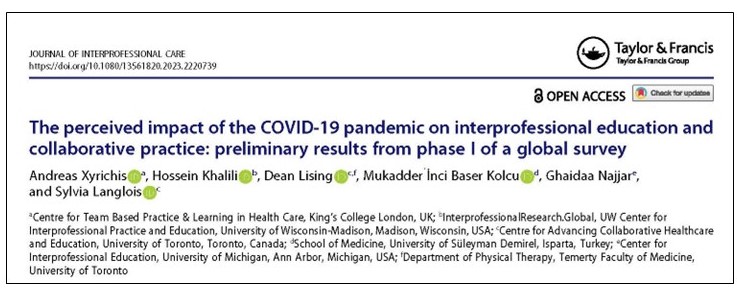
The Interprofessional Research Global (IPR Global) COVID Impact Survey Group is pleased to share that an article reporting the results of  Phase 1 of the survey, The perceived impact of the COVID-19 pandemic on interprofessional education and collaborative practice: preliminary results from phase I of a global survey, was published online by the Journal of Interprofessional Care authored by Andreas Xyrichis, Hossein Khalili, Dean Lising, Mukadder İ̇nci Baser Kolcu, Ghaidaa Najjar and Sylvia Langlois.

The COVID-19 pandemic has had a sizable effect on interprofessional education and collaborative practice (IPECP) globally, yet much of the available literature on the topic remains anecdotal and locally bounded. This body of literature reflects celebratory and aspirational reports, with many case studies of successful response and perseverance under conditions of extreme pressure. There is, however, a more worrisome narrative emerging that pointed to differences in pandemic response with concerns raised about the sustainability of IPECP during and after the pandemic. The COVID-19 task force of Interprofessional Research Global (IPR Global) set out to capture the successes and challenges of the interprofessional community over the pandemic through a longitudinal survey, with a view to inform global attempts at recovery and resilience. 

In this article, we report preliminary findings from Phase 1 of the survey. Phase 1 of the survey was sent to institutions/organizations in IPR Global (representing over 50 countries from Europe, North and South America, Australia, and Africa). The country-level response rate was over 50%. Key opportunities and challenges include the abrupt digitalization of collaborative learning and practice; de-prioritization of interprofessional education (IPE); and rise in interprofessional collaborative spirit. Implications for IPECP pedagogy, research, and policy post-pandemic are considered. 

To read the full paper, please visit https://www.tandfonline.com/doi/full/10.1080/13561820.2023.2220739  

Monday, 3 July 2023

IPR Global Establishes New Strategic Alliances with National Academies of Practice and Canadian Interprofessional Health Collaborative

Interprofessional Research Global (IPRG)'s Partnership Development Working Group engaged in a systematic process using a defined rubric to evaluate potential relationships with other interprofessional organizations globally. Organizations were explored based on information available through their websites to determine potential alignment and the feasibility of pursuing a potential working relationship. The Canadian Interprofessional Health Collaborative (CIHC) and the National Academies of Practice (NAP) were two of the organizations that were identified which appeared to have strong alignment with the mission, vision, and interprofessional values of IPRG. 

In December 2022, IPRG approached NAP and CIHC to explore the possibility of engaging in a collaborative relationship on issues of mutual interest. In January 2023, leadership from NAP and leadership from CIHC each virtually met with the leadership of IPRG (President and members of the Partnership Development Working Group) to learn more about each other’s organization and to explore if, and specifically where, there might be areas of mutual synergy, interest, and strategic benefit between both organizations. 

Following these two meetings, the IPRG Partnership Development Working Group drafted a Memorandum of Understanding (MOU) regarding the specific initiatives and information sharing that the leadership of both organizations had identified as potential areas for collaboration during the virtual conference call. A draft MOU was also shared with the leadership of IPRG to assess the feasibility of engaging in the specific initiatives and information sharing proposed for inclusion in the MOU. Following several iterations and revisions, the MOU between NAP and IPRG and CIHC and IPRG were finalized in May and signed by the leaders of each organization. 

NAP and CIHC will discuss next steps with IPRG toward operationalizing the partnership agreements. Specifically, they will consider how best to proceed with defined areas of mutual interest in the MOU - including priorities, timelines, communications and outreach, and overall coordination. We are excited about these two new strategic alliances with IPRG and look forward to initiatives of mutual benefit that can advance all of these organizations in the future!

For more information on Canadian Interprofessional Health Collaborative go to: https://www.cihc-cpis.com/

For more information about the National Academies of Practice go to: https://www.napractice.org/

For more information about Interprofessional Research Global go to: https://interprofessionalresearch.global/

Saturday, 4 March 2023

IPR.Global Partnership Development Working Group - Guide for Publishing in Journals with Interprofessional Focus


The Interprofessional Research.Global Partnership Development Working Group surveyed several journals with an interprofessional focus by posing specific questions that responses were sought to help to further clarify these journals' scope along with data such as time for review and publication. Additional information was drawn from the journal websites. 

A guide has been developed based on this information to enable members to better understand best fit for manuscript submissions on a specific topic and type of publication. This is not an all-inclusive list and for the most current information for authors, please access the respective websites or contact the journals directly.

Click on this link to access PDF copy of the guide.

IPR.G Journals Guide


Wednesday, 15 February 2023

IPR.Global PEARLS: Interprofessional Education and Collaborative Practice (IPECP) in Post-COVID Healthcare Education and Practice Transformation Era

The COVID-19 Pandemic produced significant disruptions in all aspects of life across the world. Globally, no region avoided the impact that this crisis created. It particularly stressed healthcare delivery systems with regard to resources and personnel, requiring collaboration, creativity, and resilience of health professionals, institutions, and policy makers. Educational institutions felt a similar impact where, in March 2020, many universities and colleges were forced into a new pedagogical paradigm of remote learning with online and hybrid delivery methods.

These conditions reinforced the need for interprofessional collaboration in educational and healthcare and many of the lessons learned from innovations that were developed in response to the pandemic have produced a lasting impact on persons and institutions. Our purpose is to explore and discuss the impact and application of healthcare education and practice transformation on interprofessional education and collaborative practice (IPECP) during the post-COVID era (from a global perspective) with the goal to identify best practices to integrate and sustain IPECP.

This report provides information in two sections:

IPECP and Healthcare Education and Practice at a Cross Point: The future of healthcare relies on our successful and systematic evolution out of the pandemic. The COVID-19 pandemic has placed healthcare at a crossroads of either viewing it as a temporary situation that requires short-term solutions, or as a major disruption that presents opportunities for innovation for sustainable development and transformation.

From Momentum to a Movement: Ways to Integrate and Sustain IPECP in Healthcare Education and Practice: As the landscape of higher education and healthcare is continuing to evolve to meet the growing needs and expectations of students, patients, and communities, it is time for the IPECP leaders to reflect on the changing societal trends, demographics, diversity, and technologies in becoming more adaptable for the future. The healthcare digital transformation and technologies are here to stay and grow, and the sustainability and growth of virtual learning and practice in IPECP will be reliant on how we best utilize them to meet the IPECP agenda and goal of achieving Quintuple Aim.

Thursday, 15 December 2022

IPR.Global Research & Leadership Awards Nominations due January 16th

The InterprofessionalResearch.Global (IPR.Global) Research and Leadership Awards recognize interprofessional scholarly works and leadership that exemplify excellence in the following Award Categories:

Barbara Fifield Brandt IPR.Global Award – The Barbara Fifield Brandt IPR.Global Award will recognize an academic – practice partnership team that demonstrates impact on learner and health outcomes through sustaining and connecting interprofessional education and collaborative practice in community-based practice settings serving vulnerable and high-risk populations.

Hugh Barr Global Award – The Hugh Barr IPR.Global Award will recognize an interprofessional team for the evaluation of an outstanding example of collaboration between academic institutions and health/social service delivery organizations in high/middle-income and low-income countries to promote and sustain interprofessional education and collaborative practice.

John H.V. Gilbert Global Award – The John H.V. Gilbert IPR.Global Award will recognize the author of an outstanding interprofessional doctoral dissertation, published in the past three years (since 2019), that has resulted in a learning paradigm which brings interprofessional education and learning to interprofessional collaborative practice in a practice setting where practitioners, students and patients have been engaged in developing measurable interprofessional high quality care. 

IPR.Global Distinguished Leadership Award – The IPR.Global Distinguished Leadership Award recognizes outstanding leadership of an individual/team who have made transformative, inclusive, measurable, and sustainable contributions to the promotion, implementation, evaluation, and/or advancement of interprofessional education, collaborative practice, and/or research in and across their educational/practice/network settings with a global impact.


The IPR.Global Research and Leadership Awards aim at honoring innovative interprofessional scholarly work in the format of partnership, evaluation, research, or dissertation work, accompanied by outstanding interprofessional leadership that has had a positive sustainable impact on the academic/practice/community with notable contribution to the interprofessional education and collaborative practice field at the global level.

Who Is Eligible?

Nominations for the award may be made by individuals (John H.V. Gilbert IPR.Global Award and IPR.Global Distinguished Leadership Award) or by teams/partnerships (Barbara Fifield Brandt IPR.Global Award, Hugh Barr IPR.Global Award, and IPR.Global Distinguished Leadership Award) from academia, practice, service users/consumers and/or students.

Nominations may be made by individuals external to the project. Please be advised that the Application Form, however, must be completed by the Nominee/s (Applicant/s).

Award Nomination Website: https://interprofessionalresearch.global/bestresearchawards/